
A rich mindset means you save first, buy assets, and plan for risk and rising prices. A short-term mindset means you spend first and react to every market move. These are habits, not fixed traits. This guide compares 10 money habits side by side, with rupee examples you can try today.
Key Facts
- As per AMFI data, SIPs collected a record ₹32,490 crore in September 2026. About 10.06 crore SIP accounts contributed that month.
- The Government of India asked RBI to keep retail inflation at 4%, within a 2% to 6% band. This runs from April 2026 to March 2031.
- Many fund houses allow a SIP from ₹100 a month. The minimum differs by scheme, so check the scheme documents.
- Credit card balances you do not pay in full commonly cost 30% to 42% a year. Check the rate on your own card statement.
Why do two people with the same salary end up in very different places after 20 years? The reason is rarely luck. It is usually habits. Some people save first and buy assets. Others spend first and hope to save later.
In this post, we compare the two mindsets across 10 money habits. Here, “poor mindset” does not mean a poor person. It means a short-term way of handling money. Anyone can change it. Last updated: 31 October 2026.
What is the difference between a rich mindset and a poor mindset?
The difference is in daily money habits, not in income. The table below shows the 10 habits in one place.
| Parameter | Wealth-building habit (rich mindset) | Short-term habit (poor mindset) |
|---|---|---|
| 1. Saving order | Saves first, spends the rest | Spends first, saves what is left |
| 2. Assets or status | Buys assets, tracks net worth | Buys status on EMI |
| 3. Time | Starts early with a small amount | Waits for the right time |
| 4. Risk | Emergency fund and insurance first | Thinks it will not happen to me |
| 5. Inflation | Thinks in real returns | Thinks in plain rupees |
| 6. Learning | Invests in skills and knowledge | Stops learning after getting a job |
| 7. Market fall | Reviews the plan, stays invested if the goal is the same | Panics and exits |
| 8. Income | Builds a second income stream | Depends on one salary |
| 9. Debt | Borrows for assets, avoids debt for lifestyle | Carries card balances for lifestyle |
| 10. Goals | Written goals with rupees and year | Vague wishes, no numbers |
Deepak Gokul holds the CWM® certification, is NISM-Series-XVII: Retirement Adviser Certified, and is an IRDAI Licensed Insurance Advisor. His firm, Deepak Wealth Framework Pvt Ltd, is AMFI Registered as a Mutual Fund Distributor. He has over 19 years of experience helping families in Chennai and across India plan their money.
The 10 habits, one by one
1. Save first, spend the rest
Pay yourself first. On salary day, move your savings out before you spend. A short-term habit does the opposite. It saves what is left, and often nothing is left.
For example, start a SIP the day after your salary arrives. A Systematic Investment Plan (SIP) means you invest a fixed amount every month. You do not invest one large amount at once.
2. Buy assets, not status
An asset can grow in value or earn income for you. Mutual funds and a house you rent out are examples. A new phone bought on EMI usually loses value. An EMI (Equated Monthly Instalment) is a fixed loan payment you make every month.
Track your net worth. This means everything you own minus everything you owe. Check it every six months.
3. Start early, even with a small amount
Time does more work than the amount. Many fund houses allow SIPs from ₹100 a month. So you can start small and raise the amount when your income grows.
4. Build an emergency fund and insurance first
An emergency fund is money kept aside for job loss or sudden bills. Many planners suggest 3 to 6 months of expenses. This is a rule of thumb, not a legal rule.
Then add health insurance and term insurance. Term insurance pays your family a lump sum if you die during the policy term. IRDAI regulates insurers in India.
5. Think in real returns
Inflation means prices rise every year. RBI targets 4% retail inflation, within a 2% to 6% band. Real return means your return after you remove inflation.
For example, say prices rise 6% a year. After 10 years, ₹1 lakh will buy only what about ₹55,800 buys today. Your money must grow faster than prices.
6. Keep learning
Your skills decide your income. Spend a small part of your income on courses, books and certifications. Also learn the basics of money. SEBI and AMFI publish free investor education material.
7. Stay calm when the market falls
Markets rise and fall. A fall does not mean your goal has changed. Review your plan once or twice a year.
If your goal and time period are the same, staying invested is usually sensible. Selling in panic turns a temporary fall into a real loss. If your goal is near, talk to your adviser about safer options.
8. Build a second income stream
One salary is one point of failure. A second stream can come from a skill, freelance work, a small business or rent. Start small. Even ₹5,000 extra a month can fund a SIP.
9. Borrow for assets, not for lifestyle
A loan for a home or education can make sense if the EMI fits your budget. A loan for lifestyle spending usually does not.
Credit cards need extra care. Unpaid balances commonly cost 30% to 42% a year. For example, if you leave ₹50,000 unpaid at 3.5% a month, the interest is about ₹1,750 in that one month.
10. Write goals with a rupee amount and a year
“I want to retire well” is a wish. “I need ₹1 crore for my child’s education in 2040” is a goal. A written goal tells you how much to invest every month.
How much does waiting cost you?
Here is a simple example. Two friends invest ₹5,000 a month in the same fund. Rahul starts now and invests for 25 years. Priya waits 5 years and invests for 20 years.
| Investor | Years invested | Total invested | Value at 10% (assumed) |
|---|---|---|---|
| Rahul (starts now) | 25 | ₹15 lakh | About ₹62.2 lakh |
| Priya (waits 5 years) | 20 | ₹12 lakh | About ₹36.2 lakh |
Waiting 5 years cost Priya about ₹26 lakh. She invested only ₹3 lakh less.
This is an illustration only. We assumed a 10% yearly return, which is not guaranteed. Actual returns can be higher or lower. We used a monthly compounding method with investments at the start of each month.
How can you start this week?
- Open a separate savings account for your emergency fund.
- Start a SIP for any amount you can keep up, even ₹500.
- Check that you have health and term insurance.
- Write down 3 goals with a rupee amount and a year.
- List every loan and card balance, with its interest rate.
Frequently asked questions
What is the difference between a rich mindset and a poor mindset?
A rich mindset is a set of long-term money habits. You save first, buy assets, protect yourself with insurance, and plan for inflation. A poor mindset is a set of short-term habits. You spend first, avoid planning, and react to fear. The word “poor” describes habits, not people. Habits can change.
Can I change my money mindset?
Yes. Mindset is a set of habits, and each habit can change. Start with one habit, such as saving first on salary day. Then add the next. Small steps repeated every month work better than a big plan you drop after a few weeks.
How much of my income should I save?
A common guideline is to save about 20% of your income. This is only a starting point. Your goals, age and family needs decide the right number. If 20% feels hard, begin with 5% or 10% and raise it every year.
What is the minimum amount to start a SIP?
The minimum differs by fund house and scheme. Many fund houses now allow SIPs from ₹100 a month, and AMFI has encouraged ₹250 SIPs for first-time investors. Read the scheme documents before you start. Choose an amount you can pay every month without stress.
What is an emergency fund and how big should it be?
An emergency fund is money kept aside for job loss, illness or sudden bills. Many planners suggest 3 to 6 months of living expenses. For example, if you spend ₹30,000 a month, aim for ₹90,000 to ₹1.8 lakh. Keep it in an easy-to-use savings account.
Is taking a loan always a bad money habit?
No. A loan for an asset, such as a home or education, can be sensible if the EMI fits your budget. The problem is borrowing for lifestyle spending, especially on credit cards. Unpaid card balances commonly cost 30% to 42% a year, so pay the full bill every month.
Where to read more
Sources: AMFI monthly SIP data · Reserve Bank of India · SEBI Investor Website.
Explore more from Deepak Wealth Framework: Deepak Wealth Framework home page · Financial planning consultation form.
Want a plan with your own numbers?
Share your goals and income, and we will build a simple written plan with you. Fill in the consultation form, or call us at +91 91763 40301 or +91 99402 47435. We are in Pallikaranai, Chennai.
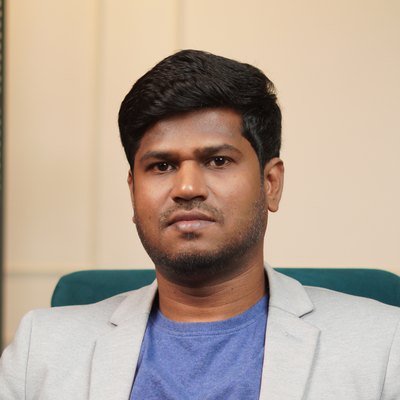
Deepak Gokul, CWM®
Chartered Wealth Manager (CWM®) · NISM-Series-XVII: Retirement Adviser Certified · IRDAI Licensed Insurance Advisor · Founder, Deepak Wealth Framework
Deepak Wealth Framework Pvt Ltd — AMFI Registered Mutual Fund Distributor | ARN-328771
Deepak Gokul specialises in goal-based financial planning, child education planning, SIP investments, mutual fund advisory, and retirement planning for families across the globe. With his Chartered Wealth Manager (CWM®) certification and specialised training in retirement advisory, Deepak helps clients build long-term wealth through structured, disciplined financial planning.
📞 +91 91763 40301 | 🌐 deepakwealth.com | 💼 LinkedIn | ▶ YouTube | 📘 Facebook | 📸 Instagram | ✕ X | ⭐ Google Business Profile
📍 Pallikaranai, Chennai
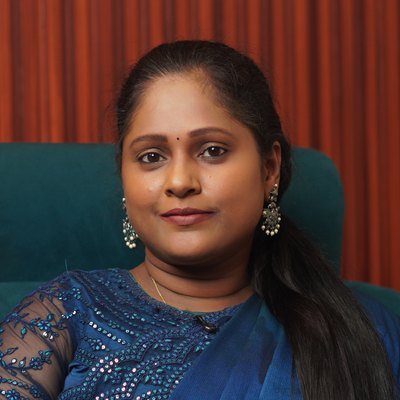
Dr. Uma Rani, BPT
IRDAI Licensed Insurance Advisor (Health, General & Life) · NISM-Series-V-A Qualified (Mutual Fund Distributors) · Co-Founder, Deepak Wealth Framework
Dr. Uma Rani is individually licensed by IRDAI to advise on health, general, and life insurance. As co-founder of Deepak Wealth Framework, she helps families choose the right insurance cover alongside their investment and retirement plans.
🌐 deepakwealth.com | ⭐ Google Business Profile
📍 Pallikaranai, Chennai
Mutual Fund investments are subject to market risks, read all scheme related documents carefully. This content is for illustrative and educational purposes only. We deal in Regular Plans.